EN
EN
 AR
AR
 BG
BG
 HR
HR
 CS
CS
 DA
DA
 NL
NL
 FI
FI
 FR
FR
 DE
DE
 EL
EL
 HI
HI
 IT
IT
 JA
JA
 KO
KO
 NO
NO
 PL
PL
 PT
PT
 RO
RO
 RU
RU
 ES
ES
 SV
SV
 TL
TL
 ID
ID
 LV
LV
 SR
SR
 SK
SK
 UK
UK
 VI
VI
 HU
HU
 MT
MT
 TH
TH
 TR
TR
 FA
FA
 AF
AF
 MS
MS
 GA
GA
 IS
IS
 LA
LA
 KK
KK

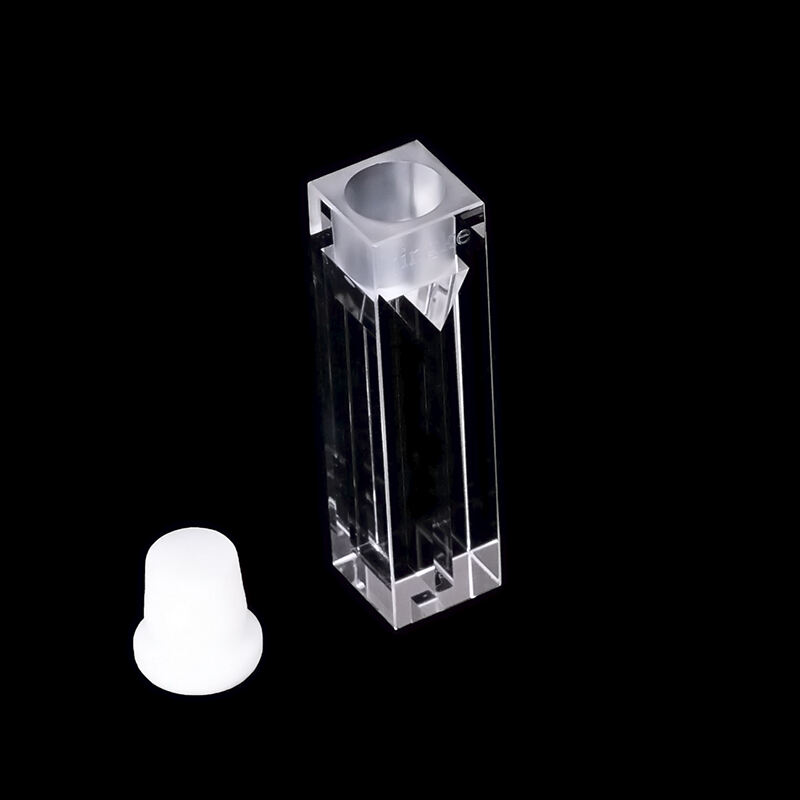
For your lab work, choosing the right cuvette is significant, although it can be challenging. Cuvettes are tiny containers used to store samples used in light-based measurements. They are made of various materials, with glass and quartz being the most common. The material you choose may affect how well they interact with various chemicals. That’s why it is crucial to determining chemical compatibility before deciding between glass and quartz cuvettes. At Jinke Optical, we understand the importance of your decision and are committed to providing you with the best information available.
Why Glass vs. Quartz Cuvettes Matter for Chemical Compatibility in Your Laboratory
When dealing with a great number of chemicals in a lab setting, one can easily have the problem of unforeseen reactions. Glass cuvettes can be cheaper and can be useful in a variety of applications. They can however react with some strong acids or bases and distort your measurements. When you expose the glass to a substance it does not belong to it deteriorates and becomes hazy. It is essential in a lab as it guarantees appropriate measurements that are fundamental. In the meantime, the quartz cuvettes have a better fight against hard chemicals. Strong acids and bases do not make them flinch. Always choose quartz in such situations and when it comes to testing a sample that consists of sulfuric acid then it is a good choice. The insignia is obligatory too. You can also notice that your sample distinctly shows under quartz and will not absorb tile light therefore when you are using UV light in your experiment you must use quartz. We strongly suggest the use of the quartz cuvettes in the study of the sensitive chemicals in Jinke Optical and to produce the correct results. Lastly, one will have to familiarize himself with the interaction of each material with other materials. The latter is an approach towards staying not to make the big mistakes and that nothing will go amiss.
Choosing the Best Cuvette Material for Your Chemical Application
The selection of the cuvette material is actually all dependent on the type of chemicals you possess and the measure you need to take. Starting with what kind of liquids or solids you are dealing with. When you are dealing with standard solutions, then glass should do. Nevertheless, in case you have to work with hard solvents, consider quartz. A mistake made includes the assumption of the similarity of every glass cuvette. A part of the glass is more resilient as compared to others who might not be able to withstand some of the chemicals. These are among the differences that are worth knowing during selection. Since chlorinated solvents are frequently used in most testing procedures, glass cuvettes made of soft-materials should not be used when handling such samples. They can be dissolved and added to your outcomes. The other parameter is the wavelength of light that you are using. Invisible light cuvettes will most likely survive the test of UV light however when you are testing UV light it is important to ensure that the ones you select are quartz. Many of the scientific applications of quartz include the ability to pass through UV light with minimal distortion. The length of the path of the cuvette should also be considered. This is the distance taken by light across the sample. A longer path length is better in samples that have been diluted very much since it will enhance the number of light rays that have been absorbed. Being dense, on the other hand, can require a shorter path length. Finally, there is the frequency on which the cuvette will be used. In case you want to perform many tests with strong chemicals purchasing quartz cuvettes in the online shop owned by jink-optics will be the appropriate option since it will save your time and ensure that you will not receive any false results. All these details are combined together when making the ultimate decision on which cuvette to use and will make the difference between the best results of your lab work.
How to Find the Best Deals on Glass and Quartz Cuvettes
At the time when you are going to buy glass and quartz cuvettes, you need to be able to get the best offers. Cuvettes are tiny containers that store liquids at the laboratory when scientists are interested in quantifying something, usually light. Jinke Optical does produce a nice assortment of glass and quartz cuvettes. To get the best prices, you would have to go to their site or call sales. To schools or research laboratories, they often make discounts or do bulk sales. You also have access to the online listing places where Jinke Optical can post their products. In some cases, it can be economically more feasible to purchase in bulk so when you have to buy a large number of cuvettes all at the same time check. And inquire about educational discounts in case you are a student or a member of an educational institution. In Jinke Optical, we would like to ensure that customers can purchase high-quality cuvettes at a reasonable cost that will ensure that all the laboratories across the world can afford supplies they need. However, remember to read customer reviews and seek warranty both of which will give you confidence in what you are buying. And the final but not the least, you can use social media to follow Jinke Optical in order to get special offers occasionally.
Why Quartz Cuvettes Perform Better Than Glass in Harsh Chemical Environments
The quartz cuvette array is often more robust than the glass products in hard chemical environment saved the expense by extending cycle times on UV lamps. This is due to the fact that quartz is stronger and doesn’t get damaged by acids as easily. In laboratories, scientists often have to handle strong acids or bases that digest glass. Quartz on the contrary, has no reaction with these agents. In other words, when you’re utilizing quartz cuvettes for your experiments, you can rest knowing that your measurements are accurate and the cuvette is not going to degrade over time. This is very important because if something breaks or alters from the chemicals a cuvette can give incorrect results which could possibly make experiments dangerous or useless. Jinke Optical offers top-quality quartz cuvettes that are designed to withstand such severe situations. In addition to being robust, quartz cuvettes are also more transparent to light than those made from glass. This is what’s known as optical clarity, and it allows scientists to see their results more easily. When you are working with delicate instruments, the best materials matter. For that reason, Quartz cuvettes by Jinke Optical are exactly what you need to make sure your tests stay secure and effective even when harsh chemicals are involved.
Cuvette Compatibility With Chemicals
The compatibility of cuvette with chemicals is of great importance because it will define the performance and duration of the cuvettes. However, in case a cuvette is composed of a substance that does not mix with the chemicals, the container can quickly disintegrate. As an illustration of this, when they are subjected to strong acids and strong bases, glass cuvettes may break or deform and pose difficulties during experiments. A cuvette malfunctioning may lead to its leakage or distortion of the liquid in the cuvette to produce false results. However, quartz cuvettes can be used with a larger number of chemicals and can also be used longer. That is, you will not be obliged to change them so often hence you will save money in the long run. These are the longevity quartz cuvettes with Jinke Optical having one of the most durable glassware on the market. In choosing cuvettes, depending on the chemicals that you work with, you will be able to trust your results more. It is also quite crucial to science as the accuracy of the measurements is of great importance. Go to as far as making your experiments as clean as possible and achieving the best results by selecting the appropriate cuvette to use.
Table of Contents
- Why Glass vs. Quartz Cuvettes Matter for Chemical Compatibility in Your Laboratory
- Choosing the Best Cuvette Material for Your Chemical Application
- How to Find the Best Deals on Glass and Quartz Cuvettes
- Why Quartz Cuvettes Perform Better Than Glass in Harsh Chemical Environments
- Cuvette Compatibility With Chemicals