EN
EN
 AR
AR
 BG
BG
 HR
HR
 CS
CS
 DA
DA
 NL
NL
 FI
FI
 FR
FR
 DE
DE
 EL
EL
 HI
HI
 IT
IT
 JA
JA
 KO
KO
 NO
NO
 PL
PL
 PT
PT
 RO
RO
 RU
RU
 ES
ES
 SV
SV
 TL
TL
 ID
ID
 LV
LV
 SR
SR
 SK
SK
 UK
UK
 VI
VI
 HU
HU
 MT
MT
 TH
TH
 TR
TR
 FA
FA
 AF
AF
 MS
MS
 GA
GA
 IS
IS
 LA
LA
 KK
KK

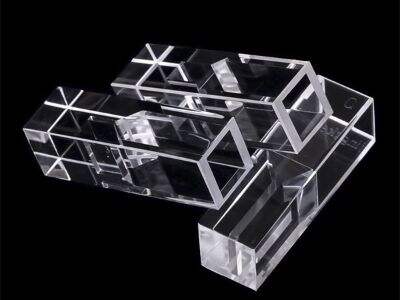
If you order UV cuvettes from a vendor, you want to make sure they work. Jinke Optical knows the importance in keeping these cuvettes in standard. UV cuvettes are a specialized type of container for containing samples to be measured by light testing. If the cuvettes are not working properly, it is possible for your results to be incorrect. This will have an influence on your experiment or project. we are going to discuss how you can test the quality of UV cuvettes that you get from suppliers and read their transmission curves. These measures will assist you in ascertaining that you are getting the optimal results.
How to verify the transmission curves of a supplier provided UV Cuvette?
To reliably test the performance of your supplier s UV cuvettes, begin with assembled materials. You’ll need a UV spectrophotometer, and that will tell you how much light the cuvettes allow to go through. You will need a blank cuvette containing some transparent solvent such as distilled water. You can consider this your baseline. Then fill another cuvette with the sample you are testing. Insert the blank cuvette into the spectrophotometer, and take a scan. This scan will provide for you a reading of baseline light transmission in the absence of sample. Now, substitute the empty with the cuvette of your sample. Run the scan again. The contrast between the two scans tells you how much light your sample gobbles up. If you realize that your suppliers cuvettes are consistently seem to be sketchy, then something may be wrong with the cuvette. You may have to perform this test several times until you are sure. Recording your data allows you to notice trends and problems over time. This method not only aids you in “quality control”, but it also builds up your own confidence with the equipment that you have.
You need to interpret UV cuvette transmission curves to make sense of your results. Reading the spectrophotometer's graph, you can determine how much light passes through at various wavelengths. A good cuvette will exhibit a smooth curve with certain dips corresponding to where the sample absorbs light. For instance, if you're analyzing a colored solution, you might observe sharp dip in your curve at the wavelength associated with your solution's color. That’s how you know that the sample absorbs at that wavelength. Sudden spikes, or unexpected drops in the curve may indicate that the cuvette is not performing correctly or that there could be some problems with your sample which need to be examined. It’s also worth noting that the curve can change depending on the material. If you give a new glass cuvettes a try, and the output is not what you were hoping for – bear in mind that some cuvettes are manufactured from different materials that absorb light differently. Be ready to compare the results with known samples. This method can help to identify the issue and whether the cuvette or sample itself is responsible. The more you practice, the better you’ll get at reading these curves and understanding what they are telling you about your tests.
What Determines Accuracy of UV Cuvette Transmission?
When we refer to UV cuvettes, we are referring to chambers that contain samples of a liquid for testing. Such tests allow scientists to determine how much ultraviolet (UV) light can get through the liquid. The accuracy and precision of measurements made from such cuvettes can be negatively influenced by a number of factors. One significant contributor is the character of the cuvette. If a cuvette is composed of lousy materials, then it may not allow the light to pass through properly. That means the results might be wrong. A second is the cleanliness of cuvette. If there are fingerprints, dust or other impurities on the cuvette these will prevent the UV light from transmitting. Make sure you clean the cuvette properly before use.
The kind of liquid being tested is a huge factor as well. Solutions absorb UV light in different ways. For instance, some liquids may absorb more light than others, which will affect the results. Even the thickness of the liquid layer in the cuvette matters. If the layer is too thick or too thin, that can affect how much UV light makes it through. There are as well folding spectators effects which temperature can also affect the findings. If the sample is too hot or cold, it could behave differently when illuminated by UV light. Finally, it is also the used UV wavelength what makes a difference in these tests. Different substances can absorb different wavelengths. Knowing all of this is key to getting good transmission measurements with UV cuvettes.
How to select the right provider of top quality UV Cuvettes that suits you?
It is very crucial to choose the proper supplier of UV novelties. Not all manufacturers are equal and some provide more useful cuvettes than others. The first thing that you need to do is to find a supplier with high reputation. You can do this by reading reviews or inquiring with other scientists about their experiences. If you find a trustworthy provider such as Jinke Optical, who always receive high praise from their customers and they use them without any problem. Re: cuvette patternsIt's also good idea to see whether the provider has a detailed info about their product – cuvettes. Decent supPlayers will detail how their cuvettes are manufactured and what they are made from. This information can assist you in determining whether the cuvettes are long lasting and reliable.
variety and range of cuvette options Another major consideration is the choice of cuvettes. A great supplier will have a variety of cuvette to satisfy the requirements. For instance, they should provide cuvettes for novel wavelengths of UV light or for diverse sample types. That way, you'll be able to find the cuvette that best suit your tests. Additionally, consider the pricing. You don’t want to purchase the cheapest option, but you also don’t want to overpay for something that doesn’t warrant it. Find a vendor that charges reasonable prices for a job well done. Lastly, good customer service at the supplier is a plus. If there are problems or questions, you want the help to come quickly. Make sure you work with a supplier like Jinke Optical that supports its customers and your experience will go a lot better.
What Is the Most Effective Way of Validating Supplier UV Cuvette Data?
It is of course important to verify the data from a supplier UV cuvette for correct measurements. One such solution is to have a known standard. This would involve using a cuvette containing a liquid tested before and having known transmission properties. After the fact, you read the supplier's cuvette with this material and check to see if your measurements have come into agreement. If they don’t, you can have confidence that the cuvette is performing well. If they don’t, it may indicate that the cuvette or test is flawed.
The other method is that the tests are conducted several times. You may compare the results obtained by several tests of the same sample in a single cuvette. If your readings are the same every time, you've demonstrated that they're consistent. But, in the case of large test discrepancies this may indicate that the cuvette is inaccurate. Using different wavelengths of UV light is a good idea, as well. By testing the same sample at several different wavelengths, you can see how cuvette performs across a range of conditions. This may be able to reveal any weak points that are inherent in the cuvette design or material.
Finally, working with other scientists is useful. Open data and open results can be helpful in that regard as well. If your colleagues obtain the same results with your cuvette, they can trust the supplier's data even more. Ultimately, verifying supplier UV cuvette data is the process of testing and retesting known standards at a variety of different wavelengths by industry peers. By doing so, you will be able to guarantee the fact of using high-quality products and services that are delivered by suppliers such as Jinke Optical.