EN
EN
 AR
AR
 BG
BG
 HR
HR
 CS
CS
 DA
DA
 NL
NL
 FI
FI
 FR
FR
 DE
DE
 EL
EL
 HI
HI
 IT
IT
 JA
JA
 KO
KO
 NO
NO
 PL
PL
 PT
PT
 RO
RO
 RU
RU
 ES
ES
 SV
SV
 TL
TL
 ID
ID
 LV
LV
 SR
SR
 SK
SK
 UK
UK
 VI
VI
 HU
HU
 MT
MT
 TH
TH
 TR
TR
 FA
FA
 AF
AF
 MS
MS
 GA
GA
 IS
IS
 LA
LA
 KK
KK

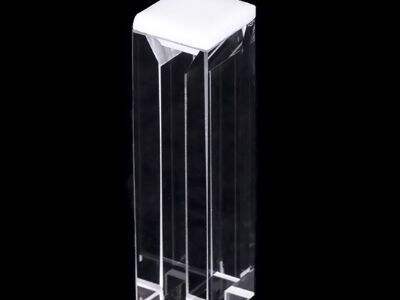
Biobanks are vital repositories of biological samples for research and testing. Testing these samples through UV-Vis applications frequently requires specialized tools called cuvettes. Cuvettes are small vessels that hold liquid samples and allow scientists to measure the light traveling through them. High throughput cuvettes are of particular use, because it is possible to test many samples in a short period of time. Quality Cuvettes Can Help Your Biobank Run Smoothly With the help of cuvettes from Jinke Optical, Biobanks can meet goals efficiently. In this post, we’ll be discussing how to acquire these light paths and giving tips on finding the best ones for your intended use
Solutions for Find High Throughput Cuvettes for UV-Vis in Biobanks
To have the best cuvettes for your Biobank, you will need a good plan. One smart tactic is understanding what you want. Various tests may use different kinds of cuvettes. For instance, certain tests require clear cuvettes and others may need colored ones. As for anything, it’s best to understand your individual UV-Vis requirements. If you know what you need, you can begin to look for suppliers. Search for organizations like Jinke Optical, which are reputed for producing top-end cuvettes. Experience When considering a supplier, try to find out how long they have been in business. A vendor with Biobank experience would be more likely to match the needs of the Biobanks
Another approach is to price shop from a variety of suppliers. You don’t want to get ripped off. High throughput cuvettes can be expensive, so shop for discounts or options to buy in bulk. You might also want to ensure the supplier has a good return policy. This way, if the cuvettes are not up to your satisfaction, you can easily return them. Remember that there’s also shipping to factor in. If you are short on cuvettes, ensure the supplier is able to get them there in time. Finally, having a good relationship with your supplier can be an advantage. If they know you — really know you, not just your wedding infrastructure — they may be kinder to you and offer better-rather-than-worse deals or help you find exactly what you’re looking for more quickly
This Is how to select the BestCuvettes for UV-Vis Applications in Your Biobank
Selecting the right Cuvette for your Biobank is critical. First consider the size of the cuvette. Cuvettes are available in different sizes, so you should select one that is compatible with your testing apparatus. If you have a UV-Vis spectrophotometer, then make sure your cuvette may fit to it. Then, think about the cuvette material. JINKE OPTICAL has glass and plastic cuvettes. Glass cuvettes are a popular choice due to their high clarity and heat resistance. But plastic cuvettes could be lighter and less breakable, which might count as a plus in busy labs
Another thing to consider is the cuvette path length. The path length is simply the distance that light traverses through a sample. The path length of most standard cuvettes is 1 cm; however, some procedures may specify a different length. Be sure to find a cuvette that meets your experiment requirements. You should also think about what type of samples you'll be testing. If you are dealing with high viscosity samples or ones that may froth, then you might also require specialized cuvettes capable of containing such materials
Reusability and cleaning is another issue. If you intend to re-use cuvettes, ensure they are easy to clean. While some cuvettes are disposable, others can be washed and reused. Finally, listen to what others’ experiences are with the different cuvettes or ask other Biobanks for their opinion. Tapping into the thoughts of others can help you make a better decision. Following these steps, you will end up with the right high throughput cuvettes for your Biobank so your testing is efficient and reliable
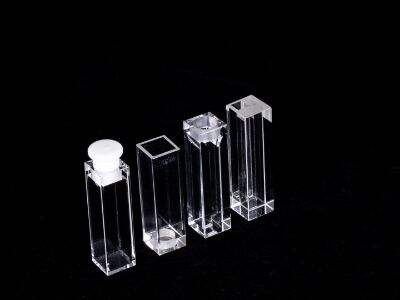
Finding a Trustworthy UV-Visible Cuvettes Wholesale Supplier
One of the most important things Biobanks can do is to get a good supplier for UV-Vis cuvettes because when you have to test samples quickly and accurately, the last thing you want is having problems with your supplies. One of the best places to begin is by looking on the internet. Many of the lab supplies companies sell cuvettes in bulk. Meanwhile, when you’re scouting for suppliers, do read both their reviews and ratings. This is to help you know that you are buying from a trustworthy source. Web sites such as Jinke Optical at Quality cuvettes in various types are for example available from websites such as Jinke Optical
Visiting science fairs and trade shows is another way to locate trustworthy suppliers. These events usually have a lot of vendors selling lab equipment. You can meet with them in person, ask questions, look at the products. That way you can get a sense for the quality of the cuvettes. It’s also an opportunity to network with other scientists who could recommend good suppliers
For that matter, you could also contact other Biobanks and labs. They can also be offering their experience and recommend suppliers they have used. Being part of discussion boards or groups specifically for lab work is also a good idea. You can submit questions and get advice from others in the industry. They are pretty well regarded in the field, Jinke Optical is a name I often hear and they provide many different types of cuvettes for various experiments
Finally, look at the prices. On the one hand, you want to purchase quality products, and on the other hand you don’t want to be burning a hole in your pocket. Price shop different suppliers to get a good deal. Some may offer big-order discounts, so be sure to ask about that. Through doing the necessary research to select reliable wholesale suppliers, Biobanks can rest easy knowing they have the appropriate instruments for their UV-Vis needs
What are the important properties of high throughput cuvettes for Biobanks
High throughput cuvettes are intended to speed and simplify testing, particularly for Biobanks that test a large number of samples at a time. This feature, making them suitable for small volume solutions, has also been reported for these cuvettes. This is crucial because it allows researchers to test many samples without depleting a great deal of material. High throughput cuvettes are generally available in 96-well format, The same as the plates used to perform many other lab tests. This configuration allows for several samples to be analyzed simultaneously, and thus save of time and effort
Also of significance is the substance used to form the cuvettes. Cuvettes of the highest quality are typically made of an UV-transparent plastic or a special glass. This is significant in that the light from the UV-Vis spectrophotometer can then penetrate without obstruction. Jinke Optical provides cuvettes made with some of the best materials available for accurate readings and results
The design of high throughput cuvettes is also typically marked for easy reading. This will assist scientists in being able to know immediately that the specimens are theirs. Some cuvettes are designed with no-spill, leak-proof features, which is very important for valuable samples
Last, but not least, many high throughput cuvettes fit into automation. This makes them compatible with machines that aid in running tests automatically. This is a very important feature for Biobanks that want to increase the efficiency and reduce the risk of human error. Biobanks can enhance their testing process and more accurate results with high throughput cuvettes that have these critical characteristics
What Are the Advantages of High Throughput Cuvettes in UV-Vis
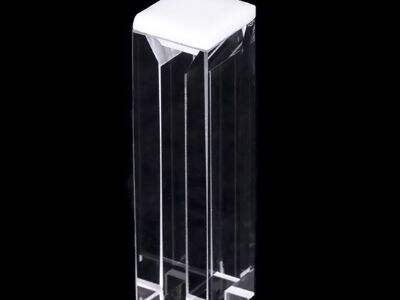
High throughput cuvettes in UV-Vis applications have great advantages for Biobanking. First, because they allow for quicker testing. Scientists can test multiple samples at a time, giving them faster results. Even more so when time is a critical factor, such as in the testing of samples for research or clinical applications. Biobanks can generate greater productivity and treat more samples with speed by employing efficient high throughput cuvette
Another benefit is cost efficiency. It can also save Biobanks money on consumables because high throughput cuvettes use less liquid for each test. It is particularly beneficial when expensive or precious specimens are involved. In minimizing waste, Biobanks can put to best use the resources they have for extracting materials from each sample. Jinke Optical offers these affordable and effective cuvettes that are ideal for Biobanking
In addition, hi-throughput cuvettes work to increase precision in testing. When samples are tested in batches, it lowers the risk that comes when dealing with each sample individually. This makes the results more valid and useful in any scientific study. Accurate findings could help Biobanks take more informed, and potentially better, decisions and provide invaluable knowledge to the scientific community
Lastly, high throughput cuvettes may provide a better opportunity for interdisciplinary research. When Biobanks can process and analyze more samples rapidly, they can disseminate their findings to other scientists faster as well. This could accelerate discoveries and improve patient outcomes. On the whole, there are very substantial advantages to taking advantage of high throughput cuvettes in UV-Vis applications, and it's one of the "mandatory" pieces of equipment for Biobanks wishing to excel in their testing and research
Table of Contents
- Solutions for Find High Throughput Cuvettes for UV-Vis in Biobanks
- This Is how to select the BestCuvettes for UV-Vis Applications in Your Biobank
- Finding a Trustworthy UV-Visible Cuvettes Wholesale Supplier
- What are the important properties of high throughput cuvettes for Biobanks
- What Are the Advantages of High Throughput Cuvettes in UV-Vis