EN
EN
 AR
AR
 BG
BG
 HR
HR
 CS
CS
 DA
DA
 NL
NL
 FI
FI
 FR
FR
 DE
DE
 EL
EL
 HI
HI
 IT
IT
 JA
JA
 KO
KO
 NO
NO
 PL
PL
 PT
PT
 RO
RO
 RU
RU
 ES
ES
 SV
SV
 TL
TL
 ID
ID
 LV
LV
 SR
SR
 SK
SK
 UK
UK
 VI
VI
 HU
HU
 MT
MT
 TH
TH
 TR
TR
 FA
FA
 AF
AF
 MS
MS
 GA
GA
 IS
IS
 LA
LA
 KK
KK

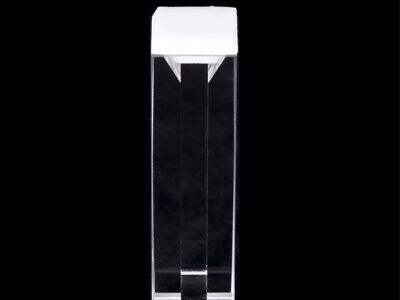
Dual path length cuvettes are unique devices that laboratory workers utilized to determine the concentration of various solutions. They can be very useful, because they enable researchers to test liquids that are either too strong or too weak. And that matters, because different solutions require different ways of measuring them faithfully and without error. At Jinke Optical, we know how important it is for researchers to get accurate data from their experiments. A dual path length cuvette has been developed to facilitate these measurements making them easier and more flexible.
Dual Path Length Cuvettes for Reliable Concentration Readings
Precise measurements are a key element in the determination of solution concentration. If the concentration is too high, the light may fail to pass effectively through and, if it’s too low, the reading could be too weak to register. Dual path length cuvettes address this with two possible lengths for the light to pass through. For instance: the more concentrated your solution is, you can opt for a shorter path length. It prevents the light from being too much absorbed, which would betray an erroneous reading. In contrast, with more dilute solutions the longer path length permits passage of a greater amount of light so that weaker signals can be better detected. This convenient feature is particularly valuable in laboratories with limited time and resources.
Selecting The Correct Dual Path Length Cuvette For Your Application
With so many options available, it can be difficult to choose the right dual path length cuvette. First just think about the kind of solution that you are measuring. Some are clearer, some are murkier. This will affect which path lengths are optimal. Second, consider the wavelength of light you plan to use for the measurements. Not all of them will work: Different cuvettes are made for different wavelengths, so you’ll want one that correlates with your light source. Also, consider the cuvette material. Some are glass and some might be plastic. Cuvettes made of glass may be best if you need a higher level of accuracy, but plastic are usually less expensive and have the benefit of minimizing weight. Lastly, how much are you going to be utilizing these cuvettes.
How Dual Path Length Cuvettes Improve Spectrophotometric Measurements Source
Dual path length cuvettes spectrophotometer are particular types of containers that we use in science for holding liquids up against when we need to see how much light they absorb. The difference between 2 flows is that they have different lengths, one being longer and the other shorter. This feature is amazing for scientists and researchers. “When we pass light through a liquid, the fraction of the light that makes it through can tell us how much of a particular thing is present in that liquid. If the liquid is very transparent or of low analyte concentration, we may use that shorter path length. That way we can get a pretty decent reading without overly bright light shining through.
Common Dual Pathlength Cuvettes Usage
Although dual path length cuvettes have proven to be effective, there may be some issues associated with them. One common source of difficulty is that individuals may not know what path length to use with their sample. If they choose the wrong length, their results may not be accurate. This can be reversed if you know how concentrated the liquid is before testing. A neat trick is to go with the shorter path length for dilute solutions and use a longer path length for concentrated ones. Another problem could be the cleanness of the cuvette. If fingerprints or dust is present in the cuvette, it may absorb or scatter light causing incorrect measurements. To prevent this, never pick up cuvettes without care and clean them only with a soft lint-free cloth. But also some of them might have failed to calibrate their instruments prior measurement.
Most from Dual Path Length Cuvettes in Different Concentrations
It pays to know your cuvette!’ prior to this for more information about dual width quartz cuvettes. For one, always begin by being aware of the concentration of the solution you are testing. For a lighter solution, the lower path length is generally preferred. This way you won't swamp the measurement with too much light. For use with darker solution, change to longer path length. This will result to a more accurate reading as you can measure the light absorption exactly. It's also a good idea to do tests with standards of known concentration. This is a way of getting to know what your readings should be. A second trick is to take the reading several times, and average it out. This goes a long way toward minimizing mistakes and giving you an accurate result. And be sure to document your results as you go along, so that you can track your progress and make future experiments better.
Table of Contents
- Dual Path Length Cuvettes for Reliable Concentration Readings
- Selecting The Correct Dual Path Length Cuvette For Your Application
- How Dual Path Length Cuvettes Improve Spectrophotometric Measurements Source
- Common Dual Pathlength Cuvettes Usage
- Most from Dual Path Length Cuvettes in Different Concentrations