EN
EN
 AR
AR
 BG
BG
 HR
HR
 CS
CS
 DA
DA
 NL
NL
 FI
FI
 FR
FR
 DE
DE
 EL
EL
 HI
HI
 IT
IT
 JA
JA
 KO
KO
 NO
NO
 PL
PL
 PT
PT
 RO
RO
 RU
RU
 ES
ES
 SV
SV
 TL
TL
 ID
ID
 LV
LV
 SR
SR
 SK
SK
 UK
UK
 VI
VI
 HU
HU
 MT
MT
 TH
TH
 TR
TR
 FA
FA
 AF
AF
 MS
MS
 GA
GA
 IS
IS
 LA
LA
 KK
KK

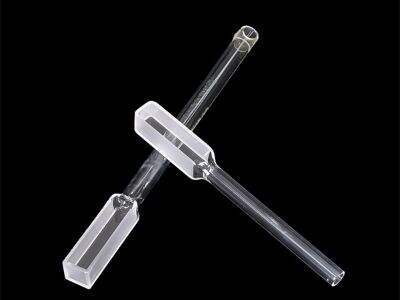
Devices that measure light, such as spectrophotometers, are as important to science as any other tool especially in fields like chemistry and biology. One important component of these devices is the cuvette. A cuvette is a small, clear vessel that contains the liquid specimen undergoing testing. For dual-beam instruments, matched-pair cuvettes are essential. These cuvettes will be perform best if they are of the same size, and made from the same material. Sure, this may feel a little fiddly, but it’s the trick to getting excellent results. At Jinke Optical, we specialize in cuvettes that deliver high-quality results for scientists and researchers.
Why You Need Matched Cuvette Pairs for Accurate Dual Beam Measurements?
In a dual beam spectrophotometer, light from the device is transmitted via two separate routes. One of the paths crosses the sample and another path crosses a reference cuvette containing blank solution. Mismatching the cuvettes will yield the wrong result. “If one cuvette is thicker, or it might be a different kind of glass, maybe it’ll block more light. In this way, the light that passes through the sample and reference will differ. If the readings are inaccurate, that can produce false findings about the sample under test. Think of it as the shoe equivalent of two pairs. If one shoe is larger, you will walk unevenly and it will be difficult to maintain your balance. Also inconsistent cuvettes can result in imbalance readings. That’s why at Jinke Optical we ensure our cuvettes are perfectly matched so scientists can have confidence in the results they receive.
Why matched pairs of cuvettes are critical for dual beam instruments?
Matched pair of cuvettes are very important feature for getting better measurements. If the two cuvettes are similar, they cancel the uncertainty due to variation between cuvets. For instance, a scientist may be measuring the concentration of some chemical in solution and wants to ensure that any alterations in the light intensity are caused by the sample not changes in absorption through the cuvettes. If one light pass through the cuvette glass diminish more than the other, it hides the real concentration of the sample. Such errors can result in research mistakes or lab work that is expensive and time-consuming.
Cuvette Quality Standards: Understanding What Wholesale Buyers Want
If you're purchasing cuvettes for a laboratory, quality is something that simply must be considered. Cuvettes are small vessels used in spectroscopic instruments to contain liquid samples. They are typically of glass or plastic. Cuvettes plays an important role in ensuring that your tests are accurate by being clear and scratch-free. And if they aren’t, the light that transits them can be absorbed or otherwise altered. This can cause incorrect responses, which is a big issue in scientific experiments.
How to Prevent Cuvette Pair Compatibility Problems?
This must be done with matched cuvette pairs in many laboratory assays, particularly in dual beam instruments. A frequent problem is that not all cuvettes are created equal (even though they may look the same). Occasionally, cuvettes contain small discrepancies that influence the outcome of an experiment. To overcome this, the cuvettes need to be a set that will work in harmony.