EN
EN
 AR
AR
 BG
BG
 HR
HR
 CS
CS
 DA
DA
 NL
NL
 FI
FI
 FR
FR
 DE
DE
 EL
EL
 HI
HI
 IT
IT
 JA
JA
 KO
KO
 NO
NO
 PL
PL
 PT
PT
 RO
RO
 RU
RU
 ES
ES
 SV
SV
 TL
TL
 ID
ID
 LV
LV
 SR
SR
 SK
SK
 UK
UK
 VI
VI
 HU
HU
 MT
MT
 TH
TH
 TR
TR
 FA
FA
 AF
AF
 MS
MS
 GA
GA
 IS
IS
 LA
LA
 KK
KK

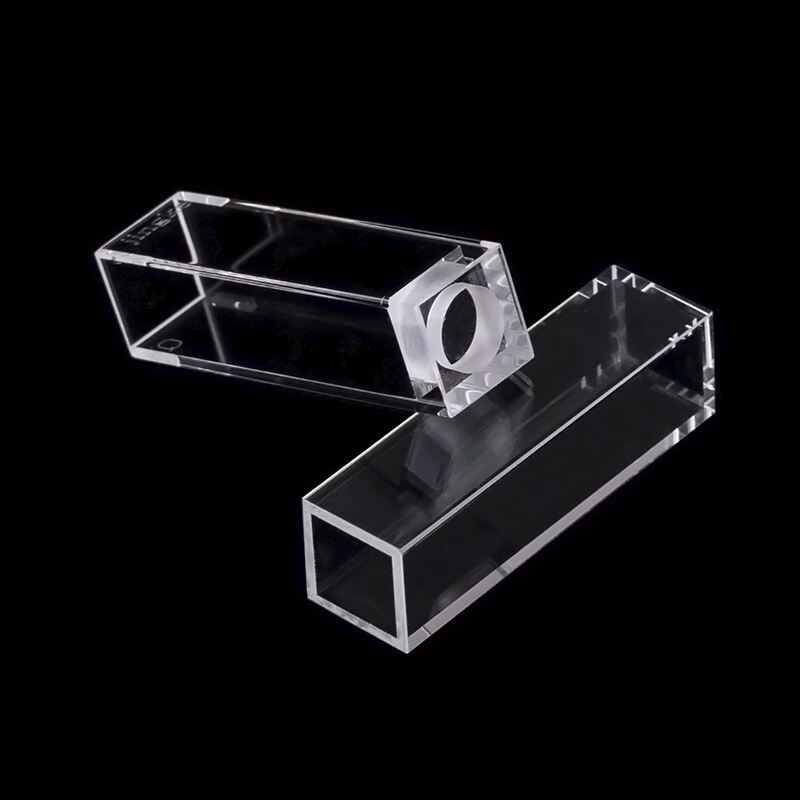
Controlling temperature is critical in scientific research to determine how quickly reactions occur. If scientists want to see how materials change over time, they’ll have to keep the temperature constant. If the temperature is too extreme, it can foul up your results. That’s where temperature-controlled cuvettes can help. These specialized containers will house liquids and help to keep the temperature constant during experiments. Jinke Optical produces a timer-controlled cuvettes cooler that is ideal for this type of application. The right equipment can make a world of difference in the accuracy and reliability of your results. Scientists can rely on the accuracy of their work when they use Jinke Optical cuvettes.
The Improvements in Kinetic Experiments due to Temperature Stability
This is important in the kinetic studies since many reactions are sensitive to temperature. For example, when it comes to how fast two chemicals react with one another, the rate of a reaction can change by even tiny shifts in temperature. If temperature is too high, a reaction might run too fast, and the results may not be reliable. Conversely, if it is too cold, the reaction may be slow enough so that it will seem like the reaction takes longer than it actually does. That means that scientists may wind up with false conclusions about how fast a reaction takes place. Researches can maintain the temperature consistent throughout experiments with Jinke Optical’s temperature controlled cuvettes. This allows them to monitor how the reaction proceeds over time without concern that the ambient temperature would impact their results. And when the temperature doesn’t fluctuate, scientists can measure the reaction changes more precisely and make more confident conclusions.
One additional fact is that temperature stability can help minimise errors in the experiments. If we don’t carefully control temperature, a scientist could get different results each time he repeats the same study. When people see that, it confuses them and that's frustrating. Since Jinke Optical cuvettes keep the temperature stable at a fixed value, experiments can be reproduced. That’s essential in science, where having others be able to reproduce results is important. Scientists can more readily trust their work when they control for temperature. They can be confident that changes are caused purely by the reaction and not differences in temperatures.
Where to Get The High-Quality Temperature Control Cuvettes in Bulk?
If you need good quality temperature controlled cuvettes, Jinke Optical is your answer. Our cuvettes are optimized for kinetic studies to achieve the best results. Our products come in multiple sizes and designs, so you can select the right product for your needs. Whether in the school lab or professional research facility, our cuvettes will also perform to your success.
Purchasing cuvettes in bulk can be a cost-effective options if you have larger projects, or more than one experiment that you need to use them for. Jinke Optical provides wholesale options, making it your go-to budget-friendly shop that’s easier on the wallet when you’re stocking up. We know how important it is for scientists to be able to trust their equipment, and we’re dedicated to offering nothing but the best. And, with our speedy shipping, you won’t be waiting long to try your experiments.
When you select Jinke Optical, you not only receive cuvettes but also excellent quality and precision. Our products are well-made, play tested, and have a strict quality control. That means when you use our optical cuvettes, you can concentrate on your vanillin analyses concerns without thinking about whether they are up to the job. So, if you are writing a paper on kinetics of some sort, get yourself Jinke Optical cuvettes. They are also the preferred brands for numerous scientists and educators.
Why Temperature Controlled Cuvette Are a Key Item in Any Lab Room
Temperature-controlled cuvettes are special instruments that scientists use to observe how quickly chemical reactions take place. When scientists examine these reactions, they must maintain the temperature constant. This matters because temperature can affect the speed of a reaction. Think about baking cookies: if the oven isn’t at the right temperature, your cookies will either be burned or otherwise not cooked properly. The same concept holds for chemical reactions in a laboratory.
The use of these cuvettes make it possible for scientists to obtain the clear and accurate results they need. If the temperature does keep shifting, however, it can lead to confusing results. Occasionally, it may simply be that the temperature’s too low to boil to give a response. Sometimes a reaction appears fast if the reaction is at too high a temperature. With a temperature controlled cuvette, researchers can ensure that their experiments are as fair and accurate. This gives them confidence in the information they receive, and enables them to make better choices upon that information.
At Jinke Optical, we understand the importance of having the appropriate tools to perform these studies. Our temperature-regulated cuvettes are made to stabilize the temperature and provide dependable results for scientists. Consistency Research can consistently concentrate on experiments without being concerned about temperature conditions altering their findings. This kind of reliability is a what makes temperature controlled cuvettes essential in any laboratory that does serious research into chemical reactions.
Choosing the Appropriate Temperature Controlled Cuvette for Your Kinetic Measurements
Selection of the appropriate temperature controlled cuvette is very essential to obtain good results in kinetic trials. There are a few things to consider when you’re making your decision as well, and we’ll help guide you in the right direction to get the best cuvette. The first factor is the size cuvette that you require. There are different dimensions and shapes of cuvettes, so the one you select should correspond to the equipment that you use. That is, if your machine was built for small samples then you need a smaller cuvette. On the other hand, if you are using more sample which I assume is not the meaning of a small amount then you need a larger cuvette.
Now consider the cuvette material. Glass and plastic cuvettes Both glass (or quartz) and plastic have their benefits. Glass cuvettes are generally more robust and heat resistant. They can be heavier and more likely to break, though. Plastic cuvettes, in contrast, are lighter and less breakable, but they might not be as good at very high temperatures. At Jinke Optical, we have a variety of optical cells to choose from so that you can pick the one which is most appropriate for your experiment.
Another consideration is the temperature of the cuvette. There are some experiments that require very specific temperatures, and for those you'll have to see if the cuvette can perform at your temperature. If a cuvette can't get to the temperature we are interested in, you potentially test the wrong outcome. Last, choose a cuvette whose operation and cleanliness is as easy and convenient as possible. You want to spend more time researching and less doing cleaning up. With that advice, you’ll be able to pick the perfect temperature controlled cuvette for your kinetic studies.
What is New About Temperature Controlled Cuvettes?
Temperature controlled cuvettes are a relatively new technology, and like all new technologies they change. And new technological advances are making these tools even more useful for researchers. Among the latest developments is improved temperature control. Some cuvettes are even equipped with integrated temperature sensors to measure the temperature very accurately. That’s how scientists are able to see the precise temperature at any point in their experiment. With that insight, they can make rapid adjustments if necessary to keep the temperature just right for their studies.
Next up - using clever tech. A few contemporary cuvette models are compatible with computers or smartphones. This has enabled scientists to monitor their experiments from afar. They can adjust settings or read temperatures without having to be right next to the cuvette. This is extremely valuable in busy laboratories, where scientists may be running various experiments concurrently.
And Jinke Optical is leading the charge here. It’s this relentless pursuit of the ideal temperature controlled cuvette that drives our design which is conceptualised in constant support of scientists. Our new models are constructed from better quality materials which resist changes in temperature so cuvettes last longer and perform more consistently. We also concentrate one being user compatible with our cuvettes from the beginning, however you are in science novice should be able to use them effortlessly. With these advancements, the temperature controlled cuvette continues to get more and more reliable and efficient toward kinetic studies, letting researchers see unbelievable results in their researches.
Table of Contents
- The Improvements in Kinetic Experiments due to Temperature Stability
- Where to Get The High-Quality Temperature Control Cuvettes in Bulk?
- Why Temperature Controlled Cuvette Are a Key Item in Any Lab Room
- Choosing the Appropriate Temperature Controlled Cuvette for Your Kinetic Measurements
- What is New About Temperature Controlled Cuvettes?